
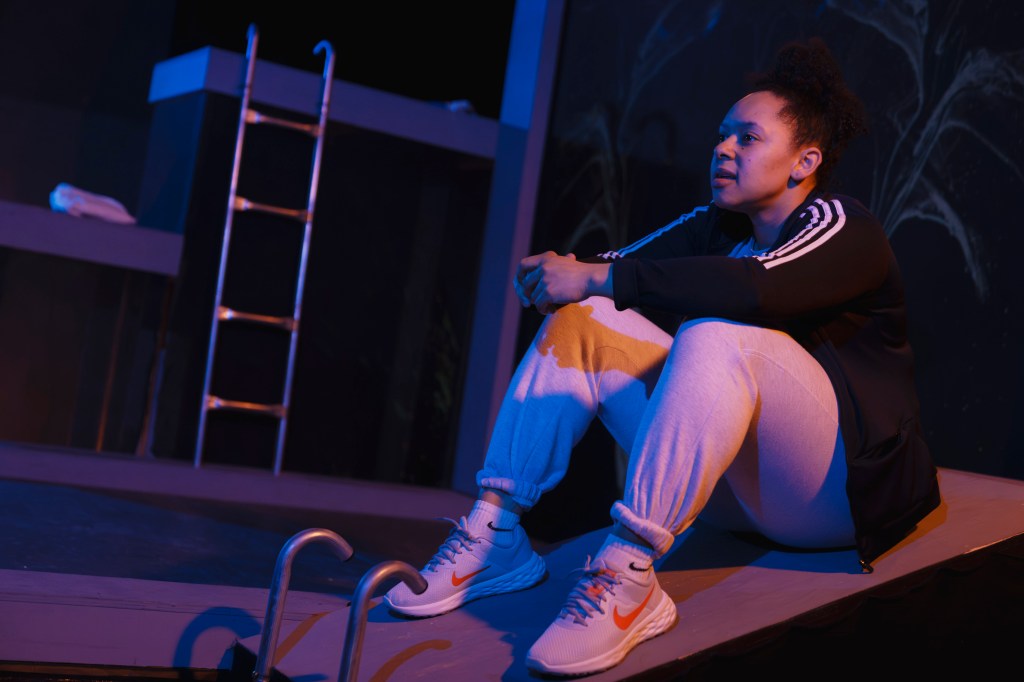

Why women in prison deserve better: reflections sparked by Rupture
When I watched Rupture, more than a decade after serving my own custodial sentence, it reopened the door to a past I have spent years learning to live alongside. Within minutes, I was back there, in that world of confinement, separation, and survival that leaves traces long after release. When I was imprisoned, my daughter was just fourteen months old. At the time, I could barely find the words to describe what I was feeling, let alone imagine a future in which I would sit on a post-show panel as a criminologist, reflecting publicly on the gendered harms of maternal imprisonment.
One line in the play struck with particular force. The protagonist, Destiny, declares: ‘I’m not vulnerable, the system made me vulnerable.’ The truth of that statement reverberated through me. It encapsulates what Waite and Darley (2025) describe as the institutional production of ‘vulnerability’ within women’s prisons, a label that too often obscures structural violence by individualising women’s pain. Vulnerability, as they argue, is not a personal flaw but a condition imposed through the intersecting dynamics of gender, poverty, and punishment. Rupture captures this reality with rare precision: the way motherhood and imprisonment collide to create a form of embodied harm that is both intimate and systemic.
The gendered experience of prison
Women’s imprisonment is fundamentally different from men’s. Although women make up around 4 percent of the prison population in England and Wales, the majority are mothers, and thousands of children are separated from their mothers every year (Baldwin, 2015; Minson, 2021). Research consistently shows that women entering custody disproportionately experience poverty, domestic abuse, coercive control, substance use, and mental ill-health (Corston, 2007; Prison Reform Trust, 2023). My own story aligns with this wider pattern: harm did not begin with my sentence, and imprisonment did not resolve it.
Prisons magnify women’s perceived ‘vulnerabilities’. Surveillance, searches, lack of autonomy, and limited access to healthcare create conditions that can retraumatise women who already have extensive trauma histories (Kelman et al. 2022; Bright et al. 2023). The emotional consequences of separation from children add a further layer. As Baldwin (2018) argues, the ‘pains of maternal imprisonment’ extend far beyond the sentence, creating a form of suspended motherhood that can have lifelong consequences.
Motherhood, loss and identity
Being separated from my daughter created an internal rupture I could not name at the time. I performed strength during visits, trying to be the stable, loving mother she deserved, only to return to my cell feeling hollowed out by the separation.
Maternal imprisonment is often described as a double punishment: the loss of liberty and the loss of motherhood (Minson, 2021). For many women, including me, it is also accompanied by intense shame, fear of judgment from professionals, and anxiety about the long-term consequences for our children (Baldwin and Epstein, 2017). Women internalise this as personal failure, even though the structural conditions that brought them to prison are rarely acknowledged.
Creative expression as research and resistance
What struck me most about Rupture was the accuracy and emotional truth of its portrayal. This wasn’t accidental. The play was co-created with imprisoned mothers through a trauma-informed, participatory process led by Open Clasp Theatre Company. Co-production of this kind not only generates artistic authenticity but also aligns with feminist criminological commitments to valuing lived experience and challenging dominant narratives (Bosworth, 2017; Carlton and Segrave, 2021).
Watching the women’s stories unfold, stories of loss, survival, longing, and I recognised so many of the invisible emotional landscapes of prison life. The play captured what traditional criminological texts often cannot: the texture of surveillance, the constant negotiations of identity, the emotional labour of mothering through steel and glass. It reminded me of the value of creative methodologies in criminology, which can hold truths that statistics alone cannot (Hartnett, 2023).
From a woman in prison to criminologist
More than a decade after leaving prison, I now work as a criminologist and social-care researcher whose work is shaped by my own lived experience. My academic identity is inseparable from my history. I am part of a growing movement of scholars who draw on personal experience of the criminal justice system to advance research, often referred to as convict criminology (Earle et al. 2023) but increasingly recognised as lived experience criminology (Antojado et al. 2025). This approach challenges traditional hierarchies of knowledge by asserting that those who have lived through the system are uniquely positioned to understand it.
My current research embodies this commitment. In a national study funded by the NIHR School for Social Care Research, I work alongside people in prison as co-researchers, ensuring their perspectives shape the study from start to finish. Such approaches reflect evidence that co-production enhances the legitimacy, depth, and impact of criminal justice research (Carr, 2019). It also represents a personal reclamation: I once felt powerless within the system; now I collaborate with those still inside to challenge its limitations.
Holding past and present together
Watching Rupture reminded me that the emotional legacies of imprisonment do not simply fade with time. Instead, they continue to shape who we are and what we do. Yet it also affirmed how far I have travelled. Ten years ago, ‘vulnerability’ was something imposed on me; today, I claim it as a source of truth, expertise, and agency.
Women in prison deserve justice systems that recognise the realities of gender, trauma, and caregiving. They deserve policies rooted in compassion and evidence, not surveillance and suspicion. Most of all, they deserve to be heard.Telling these stories, through theatre, research, or personal reflection, is not only an act of remembering, it is an act of resistance and change.
Danica Darley, PhD Student, School of Sociological Studies, Politics and International Relations, University of Sheffield
References
Antojado, D., Darley, D. and Maycock, M. (eds.) (2025) Beyond Autoethnography: Lived Experience Criminology. Abingdon: Routledge.
Baldwin, L. (2015) ‘Mothering justice: Working with mothers in criminal and social justice settings’, Women’s Breakout, pp. 1–32.
Baldwin, L. (2018) ‘Motherhood disrupted: Reflections of post-prison mothers’, Emotion, Space and Society, 24, pp. 34–41.
Baldwin, L. and Epstein, R. (2017) ‘Short but not sweet: A study of the impact of short custodial sentences on mothers and their children’, Centre for Crime and Justice Studies.
Bosworth, M. (2017) Engendering Resistance: Agency and Power in Women’s Prisons. Routledge.
Bright, A. M., Higgins, A., Grealish, A. (2023) Women’s experiences of prison-based mental healthcare: a systematic review of qualitative literature. International journal of prisoner health, 19(2), 181–198. https://doi.org/10.1108/IJPH-09-2021-0091
Carlton, B. and Segrave, M. (2021) Women, Punishment and Social Justice. Routledge.
Carr, S. (2019) ‘Co-production: Diverse approaches and new thinking’, Journal of Mental Health, 28(1), pp. 1–7.
Corston, J. (2007) The Corston Report: A Review of Women with Particular Vulnerabilities in the Criminal Justice System. London: Home Office.
Earle, R., Darley, D., Davies, B., Honeywell, D., & Schreeche-Powell, E. (2023) Convict criminology without guarantees: Proposing hard labour for an unfinished criminology.
Hartnett, S. (2023) Criminology Through Creative Practice. Bristol: Policy Press.
Kelman, J., Gribble, R., Harvey, J., Palmer, L.,MacManus, D. (2022) How Does a History of Trauma Affect the Experience of Imprisonment for Individuals in Women’s Prisons: A Qualitative Exploration. Women & Criminal Justice, 34(3), 171–191. https://doi.org/10.1080/08974454.2022.2071376
Minson, S. (2021) Maternal Imprisonment and Family Life: Understanding the Ripple Effects. Palgrave Macmillan.
Prison Reform Trust (2023) Why focus on reducing women’s imprisonment? London: PRT.
Open Clasp Theatre Company. (2023) Rupture [Theatre Production].
Waite, S. and Darley, D. (2025) ‘Problematising “vulnerability” in women’s prisons’, The Howard Journal of Crime and Justice, [online ahead of print].